
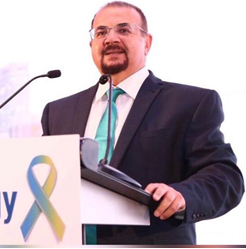
Kadhim Alabady
Dubai Health Authority,
United Arab Emirates
Abstract Title: Eating Disorders and Relative Energy Deficiency in Sport (RED-S) Among Professional Footballers: A Qualitative Exploration
Biography:
Dr. Kadhim Alabady, MBBS; MPH; MSc; DrPH; FFPH (UK); FRCP (Glasgow) Dr. Kadhim AlAbady is a distinguished public health and epidemiology expert with over two decades of experience in academic, international, and national health systems. He is a Fellow of the Faculty of Public Health in the UK (FFPH) and a Fellow of the Royal College of Physicians and Surgeons of Glasgow (FRCP). Dr. Alabady holds a Doctorate in Public Health and Epidemiology, a Master’s in Clinical Epidemiology (MSc), and a Master’s in Public Health (MPH), all awarded by universities in the Netherlands. He is also a registered Grade A Epidemiologist with the Netherlands Epidemiological Society. Since 1999, Dr. Alabady has held prominent roles across diverse sectors, including: • Academia: Erasmus University (Rotterdam, Netherlands), Queen Mary University (London, UK), and the University of East Anglia (Norwich, UK) • International Organizations: United Nations • National Health Institutions: Qatar’s National Health Authority, UK National Health Service (NHS), and the Dubai Health Authority His work has been instrumental in shaping research and development (R&D) strategies, particularly in the field of non-communicable diseases (NCDs), including mental health, cancer, cardiovascular diseases, diabetes, and broader population health issues. Dr. Alabady has authored numerous publications in the UK, contributing significantly to public health knowledge and policy.
Research Interest:
Background: Nutrition is a cornerstone of recovery and performance strategies in professional sport. Accurate assessment of body composition and dietary intake is essential for elite athletes, as appropriate nutrition supports training, optimizes performance, and reduces the risk of illness or injury. However, substantial variability exists in football players’ food choices due to individual dietary habits and cultural influences, which may predispose some athletes to eating disorders and Relative Energy Deficiency in Sport (RED-S). Purpose: This study explores the impact of eating disorders and RED-S among professional footballers, with a focus on risk factors, health implications, and opportunities for prevention. Methodology: A qualitative design was employed, utilizing in-depth interviews with 20 nutritionists and dietitians affiliated with top European football clubs. Data were collected across 20 sessions conducted in Europe during 2023–2024. Key Findings: • Eating disorders and RED-S in professional footballers are primarily linked to imbalances between dietary energy intake and energy expenditure during training and competition. The main health concerns identified include: – Insufficient nutrient intake for bone health. – Lack of mechanical bone loading. – Elevated psychogenic stress. • Early identification of eating disorders is associated with improved health outcomes; thus, prioritizing accessible mental health services for at-risk athletes is critical. However, limited screening protocols, insufficient training for healthcare professionals, and barriers to help-seeking contribute to underdiagnosis and unmet treatment needs. Raising awareness within sports organizations can enhance prevention, facilitate early detection, and promote timely intervention. Optimal nutrition remains vital to sustaining high-intensity training, maximizing performance, and supporting recovery from injury. Keywords: Eating disorders, RED-S, nutrition, professional football, sports health.